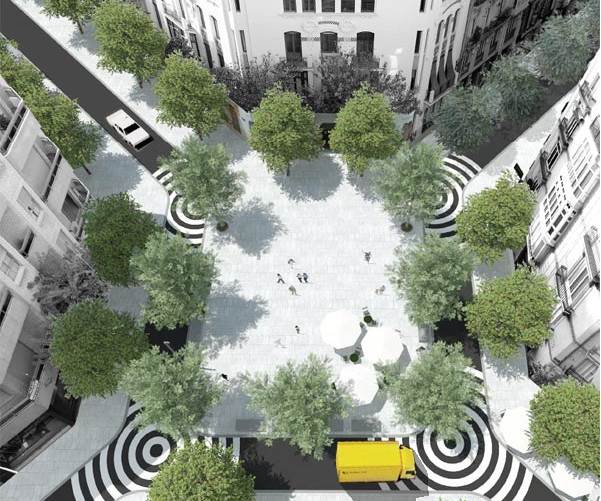
Architecture, in its deepest essence, is an act of transformation. Intervening in a pre-existing structure is not merely a technical operation, but rather an exercise in rewriting, a dialogue between the material memory of the building and the aspirations of a more conscious future. In this context, sustainable rehabilitation emerges not as a trend, but as the imperative paradigm of our era. It is a discipline that transcends the mere application of ecological solutions to become a redefinition of one’s own habitability.
At ‘EFGH Arquitectura’, we approach each rehabilitation project as an intellectual and creative challenge. Our praxis is based on the conviction that it is possible to catalyze a deep metamorphosis in the spaces we inhabit, achieving a symbiosis between human comfort, the efficiency of resources and a refined and coherent aesthetic. This article explores how creative ideation is the fundamental vector for articulating this new habitat syntax.
Towards a new definition: the ontology of sustainable rehabilitation
The concept of sustainable rehabilitation must be stripped of simplifications to be understood in all its dimensions. Far from being a compendium of ‘green’ technological additions, it constitutes a holistic approach that reconfigures the metabolism of the building. His philosophy is articulated on a theoretical basis that integrates three interconnected dimensions:
- Ecological dimension: implies a radical reduction of the environmental footprint of the property. This is achieved by minimizing energy demand, managing the water cycle efficiently, using materials whose life cycle analysis (CVA) is favorable and minimizing the waste generated during the construction process.
- Human dimension: It focuses on the creation of interior environments that promote health and well-being. Parameters such as air quality, thermal and hygrometric comfort, optimization of natural light and acoustic insulation become essential elements of the design.
- Economic dimension: Addresses the project’s viability and profitability from a long-term perspective. The optimization of the operating costs of the property, mainly through energy efficiency in homes, and the unquestionable revaluation of real estate assets, validate the initial investment as a strategic financial decision.
This comprehensive approach seeks to provide buildings with advanced resilience, enabling them to face the climate and energy challenges of the future while raising the quality of life of its occupants.
Design Intelligence: Passive Strategies and Conscious Materiality
The forefront of architectural sustainability does not lie in the most complex technology, but in the intrinsic intelligence of design. Creativity is manifested in the ability to conceive solutions that optimize available natural resources, an approach that reduces dependence on mechanical systems and, therefore, energy consumption.
Dialectics with climate: Fundamentals of passive architecture
Passive architecture represents the quintessence of intelligent design. It consists of establishing a strategic dialogue with the climatic and geographical pre-existences of the site to minimize the energy demand of the building. At ‘EFGH Architecture’, our design process begins with a rigorous analysis of the orientation, solar paths and the dominant winds. Interventions such as the reconfiguration of holes to maximize solar uptake in winter and avoid it in summer, the use of accurately sized sunscreens or the creation of hygroregular cross ventilation systems are examples of this methodology. The thermal inertia of massive materials is used to act as passive temperature regulators. This set of strategies, consolidated into standards such as the Passivhaus, is the most effective and durable way to guarantee energy efficiency in homes.
The envelope as an osmotic membrane: isolation and breathability
The envelope of a building—its facades, roof and screed—should be conceived not as an inert barrier, but as an osmotic membrane that mediates intelligently between the interior and exterior environment. High performance thermal insulation is crucial, but the choice of material is decisive. We prioritize solutions of natural origin and recycled (wood fiber, cork, cellulose) that, in addition to their low environmental impact, have a high hygroscopic capacity. This means that they are capable of absorbing and releasing environmental humidity, passively regulating the indoor climate and guaranteeing the health of the air, avoiding pathologies associated with condensation.
Material Archeology: Reuse and Circular Economy
A rehabilitation is also an act of constructive archeology. Before prescribing demolition, we investigate the potential of existing materials and systems. The practice of reuse and recycling is a pillar of the circular economy, a model that opposes frontally the linear cycle of ‘extract-produce-discard’ that has dominated the construction. By recovering and giving a new use to elements such as wooden beams, hydraulic pavements or locksmith elements, we not only drastically reduce the embedded energy of the project and the generation of waste. We also preserve the historic patina of the building, its memory, integrating it into a new contemporary language. initiatives such as those promoted by the Green Building Council Spain (GBCE) are essential to consolidate this vision in the sector.
In conclusion, sustainable rehabilitation is a discipline that requires technical rigor, aesthetic sensitivity and deep ethical responsibility. It represents the transition to an architecture that not only consumes resources, but also regenerates and optimizes, creating spaces that are both shelter, inspiration and a positive legacy.
We invite you to Start a dialog With ‘EFGH Architecture’ to explore the latent potential in your property and transform your vision together into a tangible and enduring reality.